
We talk a lot about discipline.
Better habits. Better routines. Better systems.
But no one talks about safety.
And yet, safety is the foundation of everything.
If you feel overwhelmed in your home — even after decluttering, organizing, or trying to “get it together” — it might not be because you’re doing something wrong.
It might be because your nervous system doesn’t feel safe where you live.
When your environment is constantly asking things of you — visually, mentally, emotionally — your body stays in a low-grade state of alert. Even when nothing is technically “wrong.”
You’re not lazy.
You’re not disorganized.
You’re responding exactly as a human nervous system is designed to respond.
Overwhelm Isn’t a Motivation Problem
Most homes are designed for productivity, storage, or aesthetics — not regulation.
So we end up with:
- Clutter we step over because we don’t have the capacity to deal with it
- Routines that only work when we’re already regulated and well-rested
- Systems that fall apart the moment life gets busy (which is always)
Over time, your body learns to brace the moment you walk into certain rooms.
That’s why rest doesn’t feel restorative.
That’s why you’re tired even after “doing nothing.”
That’s why your home never quite feels done.
What It Means to Design for Safety First
I don’t design routines for perfect days.
I design them for real ones.
Safety-based routines are:
- Simple enough to repeat on low-capacity days
- Visually calm enough to reduce cognitive load
- Flexible enough to bend without breaking
When your home supports your nervous system, you stop living in reaction mode.
You move slower — without falling behind.
You reset faster — without starting over.
You feel supported instead of constantly behind.
And that shift changes everything.
Three Small Shifts You Can Make Today
You don’t need an overhaul to feel a difference. Start here:
1. Create One Visual “Landing Zone”
Choose a single surface in your home — a counter, dresser, or entry table — that stays mostly clear.
Your brain needs at least one place that signals: nothing is waiting on you.
2. Lower the Bar on Routines
Ask yourself:
What’s the easiest version of this that still counts?
A two-minute reset you actually do is far more regulating than a perfect system you avoid.
3. Remove One Daily Friction Point
Put things where you naturally reach for them — not where they “should” live.
Less decision-making equals more calm.
These shifts may seem small, but your nervous system feels the difference immediately.
Why Aesthetic Matters (and It’s Not Just About Looks)
Beauty isn’t frivolous — it’s regulatory.
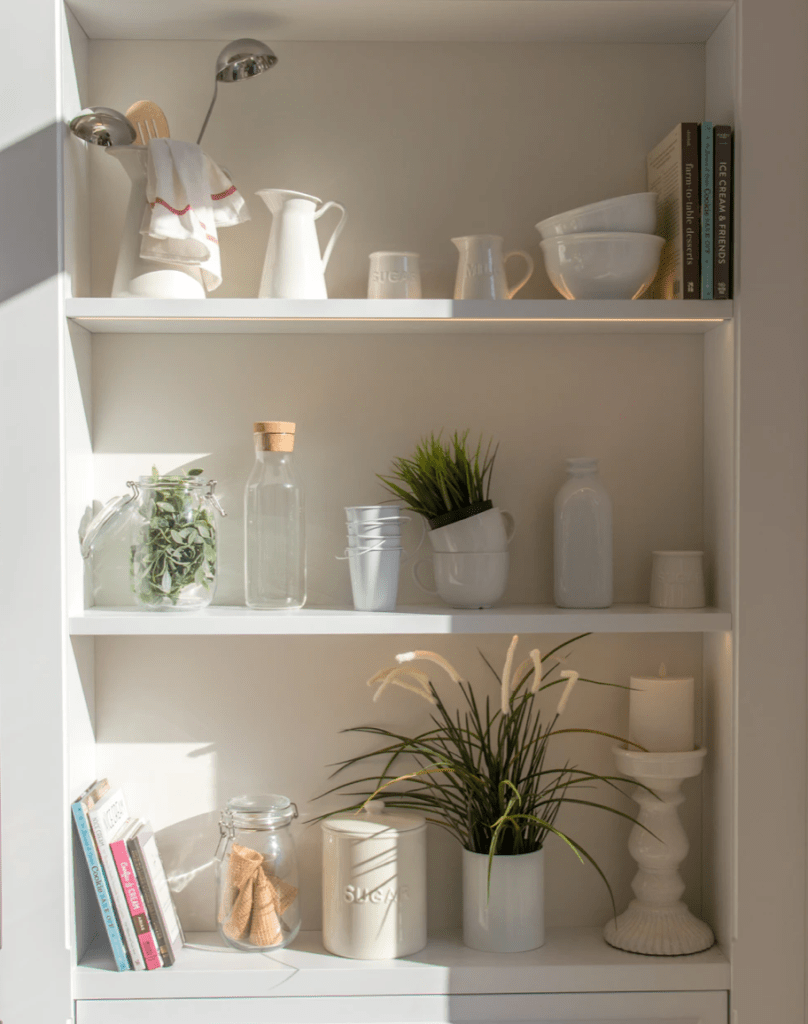
When containers, baskets, and systems are visually quiet and intentional, your brain processes less information. That reduces stress before you even realize it.
Every organizing piece I use in my own home is chosen to:
- Minimize visual noise
- Be easy to use daily
- Adapt as life and seasons change
I’ve linked my favorite aesthetic organizing pieces here so you can see exactly what I use and love:
Ready for a Real Reset?
If you’re sick of feeling overwhelmed in your own home — and you don’t know where to start — this is exactly why I created The Home Reset Guide.
This isn’t about purging everything you own.
It’s not about rigid systems or aesthetic minimalism.
It’s about realigning your space so it supports your nervous system instead of draining it.
Step-by-step.
Bite-sized.
Designed for real life.
You don’t need more discipline.
You need a home your nervous system can trust.
And that is something you can build — one small shift at a time.
XO, Lizz
 Lizz Duffy Lifestyle
Leave a comment